zaterdag 5 mei 2018

IMPRESSIE UTRECHTSE DODENHERDENKING 4 MEI 2018

Op vrijdag, 4 mei 2018 heeft om 10.30 uur - in nauwe samenwerking tussen de Priesterbroederschap Sint Pius X (FSSPX) en het Informatiecentrum Tweede Wereldoorlog (I-WO-II) - een Dodenherdenkingsrequiem plaatsgevonden in de Sint Willibrord Kerk in Utrecht. Celebrant van dit schitterende Dodenherdenkingsrequiem is Pater Carlo de Beer. Prachtig orgelspel en schitterend gezang van de Schola van de Sint Willibrord Kerk hebben dit indrukwekkende Requieim begeleid.

Na afloop van het Dodenrequiem zegende Pater Carlo de Beer een Votiefkaars. Deze kaars werd vervolgens de Pater De Beer in aanwezigheid van Anne Louis Cammenga, en diens collega mr. Fred Jan IJspeerd, beiden Directeur en Adviseur van het Informatiecentrum Tweede Wereldoorlog (I-WO-II) bij het Mariabeeld links van het altaar in de Sint Willibrord Kerk neergezet voor de Zielenheil van alle omgekomen slachtoffers in de Tweede Wereldoorlog. Een bijzonder ontroerend moment.

Om 19.00 uur 's avonds woonden Anne Louis Cammenga en mr. Fred Jan IJspeerd de Vesper van de Raad van Kerken in de Pieterskerk bij. Vervolgens liepen de beide heren in een stoet mee naar het Domplein waar de Utrechtse Dodenherdenking plaats zou gaan vinden.

Nadat op het Domplein eerst de fakkel aan de voet van het verzetsmonument werd ontstoken, werd vervolgens om 20.00 uur door alle aanwezigen op het Domplein de twee minuten in acht genomen.

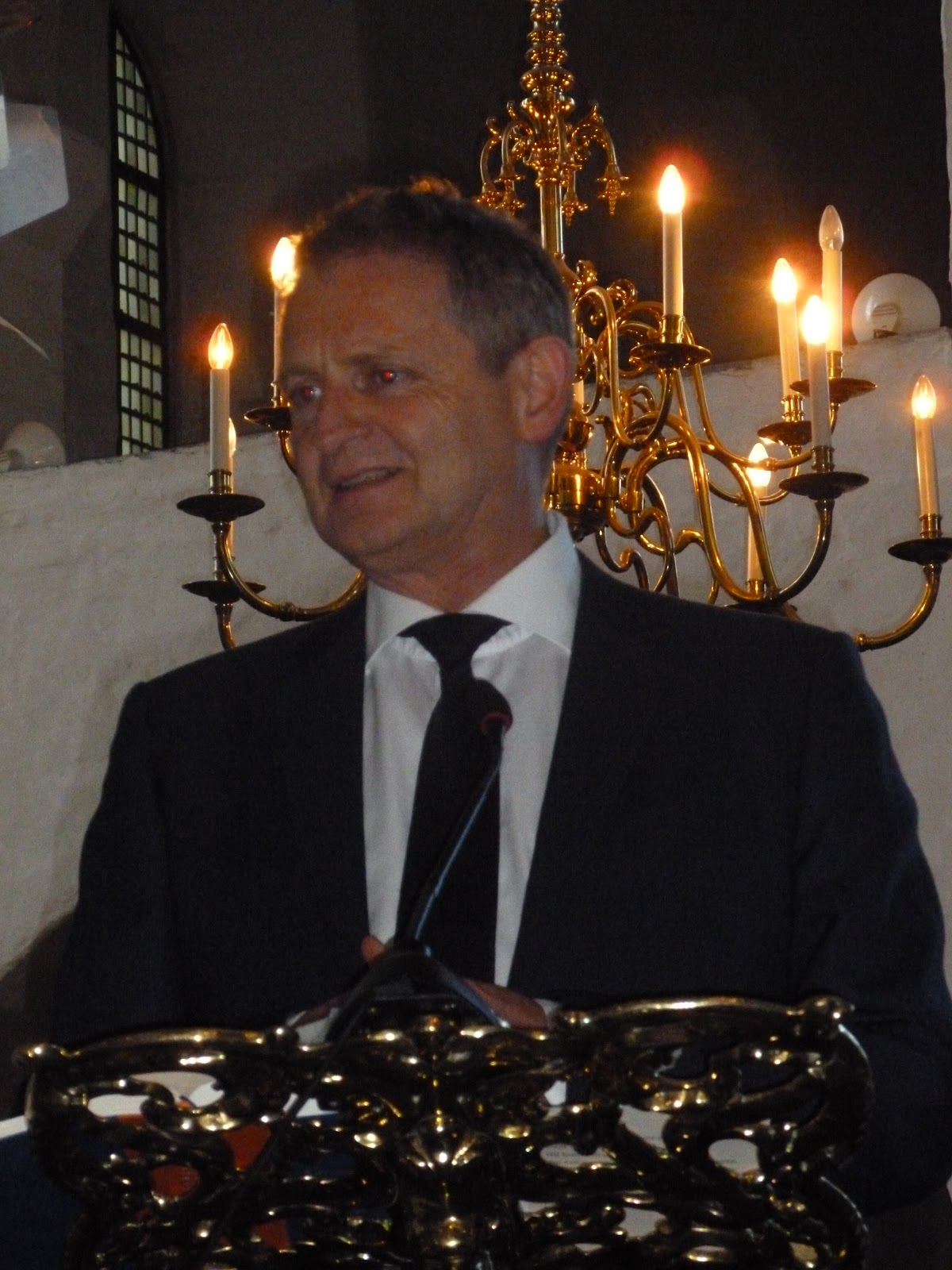
Burgemeester Jan van Zanen van de de stad Utrecht hield vervolgens een redevoering waarin hij de groepen mensen opnoemde die tijdens de Tweede Wereldoorlog zijn omgekomen. Hij benadrukte het belang van het herdenken van 4 en 5 Mei in zowel het heden als in de toekomst.

Daarna werden kransen bij het verzetsmonument neergeled. Ook werd namens de Priesterbroederschap Sint Pius X (FSSPX) en het Informatiecentrum Tweede Wereldoorlog (I-WO-II) een Teddybeer met een rouwkaart met tekst bij het Tweede Wereldoorlog monument op het Domplein neergezet door Anne Louis Cammenga, Directeur van het Informatiecentrum Tweede Wereldoorlog (I-WO-II). Cammenga werd daarbij vergezeld van zijn collega mr. Fred Jan IJspeerd.

Daarna heeeft I-WO-II-Directeur Anne Louis Cammenga het Herdenkingsconcert in de Domkerk bijgewoond. Indrukwekkend was de videoboodschap van twee Utrechtse verzetshelden. Het concert was schitterend en het orkest werd hiervoor dan ook door alle aanwezigen na afloop terecht met een daverend applaus beloond.

Een fotoimpressie van het bovenstaande treft u hieronder aan.


_______________________________________________________________________________

FOTOIMPRESSIE DODENHERDENKINGSREQUIEM SINT WILLIBRORD KERK UTRECHT


DODENHERDENKING RAAD VAN KERKEN IN UTRECHTSE PIETERSKERK


DODENHERDENKING OP UTRECHTSE DOMPLEIN MET O.A. TOESPRAAK VAN BURGEMEESTER JAN VAN ZANEN


 DODENHERDENKINGSCONCERT UTRECHTSE DOMKERK
  
 
 __________________________________________________________________


NEGEN FOTO'S VAN DE ZEISTERSE NEONAZI JAN PETER MANTE 


_____________________________________________________

donderdag 19 april 2018

FSSPX-Cadeau: Relikwie Italiaanse (Paduaanse) Heilige - Voorspeller Belangrijk Bombardement Tweede Wereldoorlog - voor Anne Louis Cammenga, Directeur Informatiecentrum Tweede Wereldoorlog (I-WO-II)


Zeist, 19 april 2018


Beste Lezers,

Op zaterdag, 14 april jl. heb ik in de pastorie van de Priesterbroederschap St. Pius X (FSSPX) in Gerwen tijdens een voorbereidingsbespreking voor de Dodenherdenkingsmis op 4 mei a.s. in de Sint Willibrord kerk in Utrecht uit handen van een medewerker van de Priesterbroederschap St. Pius X (FSSPX) in aanwezigheid van Pater Carlo de Beer, Priester van de Priesterbroederschap St. Pius X (FSSPX) als cadeau een relikwie ontvangen van de Heilige Leopold Mandić. 

De relikwie betreft een stukje van de kleding van Sint Leopold Mandić. Een Wikipedia-beschrijving van deze heilige treft u hieronder aan. Een zeer belangrijk gedeelte van deze tekst treft u in het Engels hieronder aan:

As a result of the bombing during World War II, the church and part of the friary where Mandić lived were demolished, but his cell and confessional were left unharmed. He had predicted this before his death, saying, "The church and the friary will be hit by the bombs, but not this little cell. Here God exercised so much mercy for people, it must remain as a monument to God's goodness." 

Pope Paul VI beatified Leopold on 2 May 1976. He was canonized by John Paul II during the General Assembly of the Synod of Bishops on 16 October 1983. Leopold is hailed as the "Apostle of Unity". At the personal request of Pope Francis, Mandić's remains were brought to Rome for veneration during the 2015-2016 Extraordinary Jubilee of Mercy. 

Gezien het feit dat een gebeurtenis in de Tweede Wereldoorlog uiteindelijk van uiterst groot belang voor de latere zalig- en heiligverklaring van deze Heilige Leopold Mandić.is gebleken, vervult het mij als directeur van het Informatiecentrum Tweede Wereldoorlog (I-WO-II) met grote ontroering en diepgevoelde dankbaarheid dat ik vanuit de Priesterbroederschap St. Pius X (FSSPX) dit onvergetelijk mooie geschenk heb mogen ontvangen. 

Deze relikwie, waarvan u uiteraard hieronder een afbeelding aantreft, zal mij - vanuit de principes, de leer en de regels van het Rooms-Katholieke geloof - blijvend inspireren bij mijn werkzaamheden als directeur van het Informatiecentrum Tweede Wereldoorlog (I-WO-II), alsmede op mijn persoonlijke religieuze (levens)pad binnen de Rooms-Katholieke Kerk, waarvan - net als ikzelf - 1,2 Miljard mensen wereldwijd actief belijdend en meelevend lid zijn. 

Met gevoelens van de meeste hoogachting en met allerhartelijkste groet, 
INFORMATIECENTRUM TWEEDE WERELDOORLOG (I-WO-II)

Anne Louis Cammenga 
Directeur
Website: www.iwoii.nl 


Leopold Mandić 

(Bron: Wikipedia: https://en.wikipedia.org/wiki/Leopold_Mandi%C4%87)

From Wikipedia, the free encyclopedia

St. Leopold Mandić, O.F.M. Cap.
Sveti Leopold Bogdan Mandic Rijeka.jpg
Religious and priest
BornBogdan Ivan Mandić
12 May 1866
Herceg Novi, Kingdom of Dalmatia, Austro-Hungary
Died30 July 1942 (aged 76)
Padua, Kingdom of Italy
Venerated inRoman Catholic Church
(Capuchin Friars, Croatia & Diocese of Padua)
Beatified2 May 1976, Vatican City, by Pope Paul VI
Canonized16 October 1983, Vatican City, by Pope John Paul II
Major shrineShrine of St. Leopold Mandić, Padua, Italy
Feast12 May (30 July in Roman martyrology)

Church of St. Leopold Mandic in Herceg Novi
St. Leopold Mandić, O.F.M. Cap. (also known as Leopold of Castelnuovo), (12 May 1866 – 30 July 1942), was a Croatian Capuchin friar and Catholic priest,[1] who suffered from disabilities that would plague his speech and stature. He developed tremendous spiritual strength in spite of his disabilities and became extremely popular in his ministry as a confessor, often spending 12–15 hours in the confessional.[2]
Although Mandić wanted to be a missionary in Eastern Europe, he spent almost all his adult life in Italy, living in Paduafrom 1906 until his death. He also spent one year in an Italian prison
during World War I, since he would not renounce his Croatian nationality.[1] He also dreamed unceasingly about reuniting the Catholic and Orthodox churches and going to the Orient. He became known as an Apostle of Confession and an Apostle of Unity. He made a famous prayer that is the forerunner of today's ecumenism.

Life[edit]

Early life[edit]

He was born Bogdan Ivan Mandić in the coastal town of Herceg Novi (Italian: Castelnuovo), on the Bay of Kotor, then in Austro-Hungary but today part of Montenegro. He was the twelfth child of Dragica Zarević and Petar Antun Mandić, owner of an Adriatic fishing fleet, natives of Zakučac (in the hinterland of the city of Omiš, 28 km from Split). The family was of noble origin which had originated in the Vrhbosna Province in Bosnia and moved to Croatia in the 15th century. The family eventually lost most of its wealth, and became more sympathetic to those who suffered in similar situations.
Mandić grew up in the orbit of a community of Capuchin friars based in the Province of Venice who had served in his town for two centuries, dating from when the area was ruled by the Republic of Venice. Physically malformed and delicate, he grew to a height of only 1.35 m (4'5"), with a clumsy walk and afflicted by stuttering. Having felt called to follow that way of life, in November 1882, when he was 16, he went to Udine to enter the minor seminary of the Capuchin Venetian Province. Two years later he was admitted to the friars' novitiate in Bassano del Grappa, where he was clothed in the Capuchin habit and given the religious name of Leopold of Castelnuovo. On 3 May 1885, he made his first profession of religious vows, after which he was sent to pursue his studies for Holy Orders in Capuchin friaries in Padua and Venice. He made his profession of perpetual vows in 1888.

Priesthood[edit]

On 20 September 1890, Mandić was ordained to the priesthood at the Basilica of Santa Maria della Salute in Venice at the age of 24 by Cardinal Domenico Agostini, Patriarch of Venice.
After his ordination, Mandić was sent to posts in various Capuchin friaries in the Venice region and in his native Croatia. Among his various tasks were the teaching of the seminarians who followed him, as well as the household duties of the house, such as porter. Common to all his assignments was that of the duty of a confessor at the church which the friars served. This went on until 1906, when he was assigned to the Friary of Santa Croce in Padua. It was there that he would spend the rest of his life.

Death[edit]

Mandić suffered from esophagus cancer, which would ultimately lead to his death at age 76. On 30 July 1942, while preparing for Mass, he collapsed on the floor. He was then brought to his cell, where he was given the last rites. Friars who had gathered at his bed began singing the Salve Regina and saw that Leopold died as they sang "O clement, O loving, O sweet Virgin Mary".

Veneration[edit]

As a result of the bombing during World War II, the church and part of the friary where Mandić lived were demolished, but his cell and confessional were left unharmed. He had predicted this before his death, saying, "The church and the friary will be hit by the bombs, but not this little cell. Here God exercised so much mercy for people, it must remain as a monument to God's goodness." Pope Paul VI beatified Leopold on 2 May 1976. He was canonized by John Paul II during the General Assembly of the Synod of Bishops on 16 October 1983. Leopold is hailed as the "Apostle of Unity".

Jubilee Year[edit]

At the personal request of Pope Francis, Mandić's remains were brought to Rome for veneration during the 2015-2016 Extraordinary Jubilee of Mercy. He and his fellow Capuchin friar, Pio of Pietrelcina, were designated as saint-confessors to inspire people to become reconciled to the Church and to God, by the confession of their sins.[3] Their bodies were available for veneration, first at the Basilica of Saint Lawrence outside the Walls, administered by the Capuchin friars, then at St. Peter's Basilica.[4]

Quotes[edit]

  • "Some say that I am too good. But if you come and kneel before me, isn't this a sufficient proof that you want to have God's pardon? God's mercy is beyond all expectation."
  • "Be at peace; place everything on my shoulders. I will take care of it." He once explained, "I give my penitents only small penances because I do the rest myself."
  • "A priest must die from apostolic hard work; there is no other death worthy of a priest."
  • "Faith! Have Faith! God is both doctor and medicine."[5]
  • "I wonder at every moment how a person may risk the salvation of their soul for reasons absolutely futile and weak."[5]